As AI-written summaries answer more questions on the results page itself, Indian businesses are finding that ranking well and being chosen are no longer the same thing.
Picture a procurement manager in Pune who needs a new packaging supplier. Two years ago she would have typed three words into Google, opened five tabs and compared. Today she is just as likely to type, or speak, a full question: which suppliers near Pune make food-grade corrugated boxes with short lead times?
What comes back often begins with a written answer, not a list of links. A few company names appear in it. Most do not. By the time she opens a website, if she opens one at all, her shortlist already exists.
This is the quiet change in how businesses get found, and most owners have not adjusted for it.
The click is getting rarer
The clearest measurement so far comes from the Pew Research Center, which tracked the browsing of 900 American adults in March 2025. When a Google results page carried an AI summary, people clicked a regular search result on 8% of visits. Without a summary, the figure was 15%. Links inside the summary itself were clicked about 1% of the time, and roughly a quarter of those sessions ended right there.
Google disputes the methodology, and the data is American. But the direction is hard to argue with, and India is not a bystander. Google brought AI Mode, its conversational search experience, to Indian users in June 2025, and within months extended it to seven more Indian languages. The company has described India as its largest user base in the world for voice and visual search. Add the people who now put buying questions to ChatGPT, Gemini or Perplexity directly, and a meaningful share of research happens in places where no website is visited.
For a business owner, the consequence is simple. The first impression is increasingly a sentence written by a machine, and the business has no direct control over that sentence.
What businesses are getting wrong
The common reaction is to treat this as a new trick to buy. Agencies have been quick to offer “AI SEO” packages, usually with a promise of placement that nobody can honestly make. No one outside these companies can guarantee what an AI system will say.
The second mistake is to look at the old scoreboard. A business can hold its rankings, see traffic fall, and conclude that its SEO has failed, when in fact the same number of buyers are forming a view of it without visiting. The reverse is also true. A report can show healthy traffic while the company is absent from the answers that matter.
The third mistake is the oldest one: a website that says very little. Pages full of phrases like “end-to-end solutions” and “customer-centric approach” were always weak. Now they are also unreadable to the systems doing the summarising, because there is nothing specific in them to extract.
What a machine needs from a business
AI systems put answers together from material they can read and from sources they have reason to trust. That points to three practical requirements.
The first is specifics. What exactly does the company make or do, for whom, in which cities, at what minimum order, with what turnaround? A page that answers real buyer questions in plain sentences gives a summarising system something to work with.
The second is a site that can be read at all. Many business websites assemble their content in the visitor’s browser using scripts. A person sees a finished page. A number of the automated systems that read the web see far less, sometimes an almost empty one. This is a build decision, and most owners never learn it was made.
The third is what others say. In Pew’s analysis, the sources cited most often in AI summaries were Wikipedia, YouTube and Reddit: third-party sites, not company pages. For a mid-sized business, the equivalent is a consistent presence across directory listings, its Google Business Profile, trade publications, reviews and industry forums. If the address, services and name differ from one listing to the next, a system weighing those sources has less reason to mention the company.
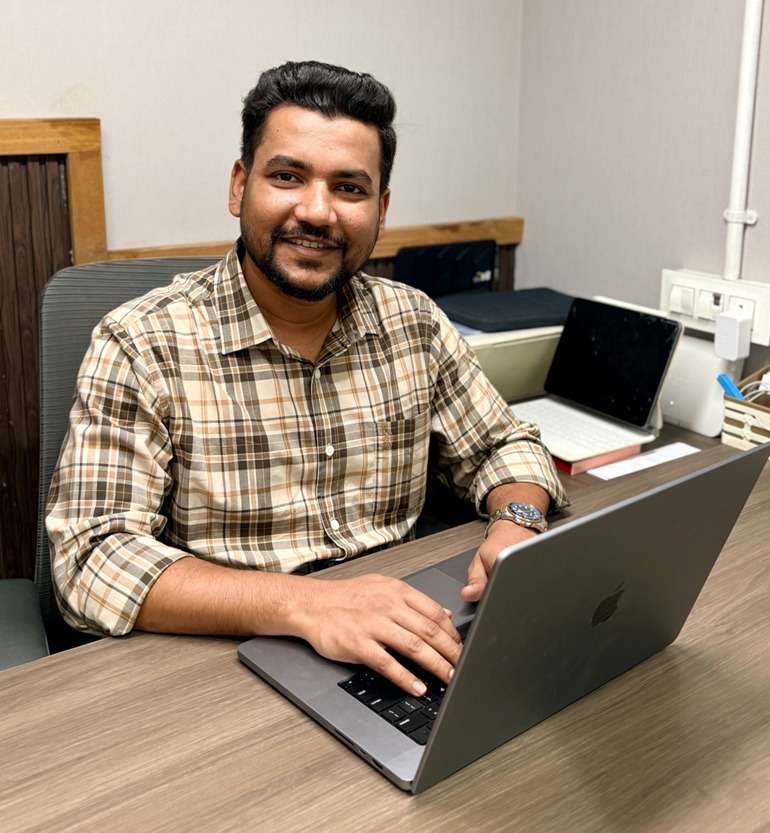
“Most of what helps here is not new. It is the unglamorous work businesses have postponed for years: saying clearly what you do, keeping your details consistent, and building a site that loads as real content. What has changed is the cost of skipping it,” says Ayaz Sayed, founder of Mumbai-based digital agency AdFox Media.
Fewer visitors, later in the decision
There is a second-order effect that deserves more attention. If research happens before the visit, the people who do arrive are further along. They are not browsing. They are checking.
That changes the job of a website. Its task is no longer to persuade a stranger from scratch. It is to confirm a decision that is half made: show the proof, answer the remaining doubt, and make the next step obvious. Sites built as brochures, with a slideshow at the top and a contact form buried three pages deep, are poorly suited to that visitor.
Five checks any business can run this week
- Ask an AI assistant the question your best customer would ask, in their words, and see who is named. Repeat it for your category in your city.
- Read your own service pages and count the concrete facts: locations, capacities, timelines, prices or ranges, sectors served.
- Search your company name and compare the address, phone number and description across every listing that appears.
- Ask whoever built your website whether the main content is present in the page source, or only appears after scripts run.
- Add “how did you first hear about us?” to your enquiry process. Analytics tools will not capture a recommendation made inside a chat window.
None of this guarantees a mention. It does improve the odds, and it improves the business’s standing with human readers as well.
Search is not going away, and neither are websites. But the order of events has changed. For a growing number of purchases, the opinion now comes first and the visit second. Businesses that keep preparing only for the visit are preparing for the second half of the conversation.
AdFox Media is a Mumbai-based digital agency working across web development, SEO and performance marketing for small and mid-sized businesses. More at adfox.media.