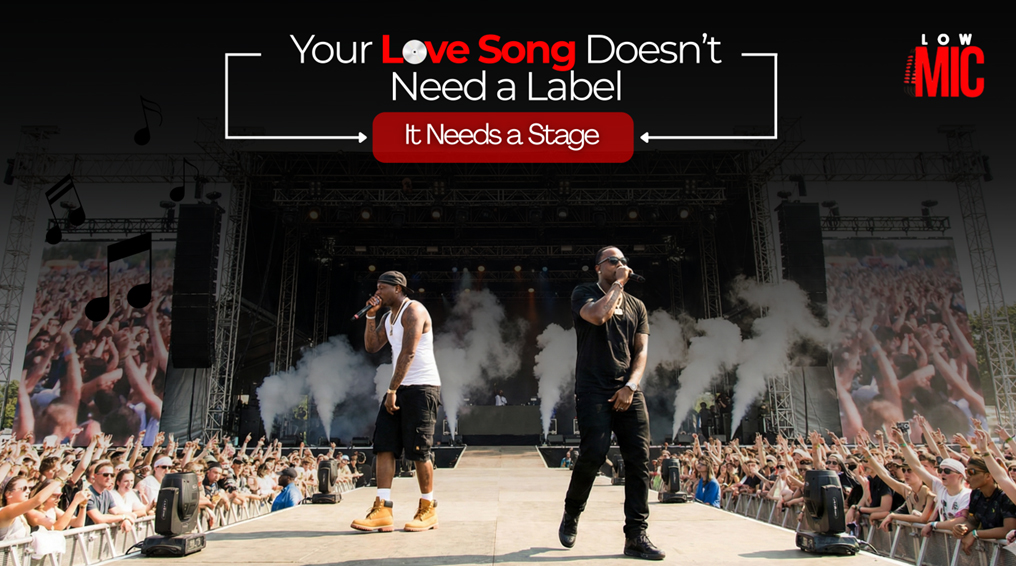
Releasing a love song is only half the work. What happens after it’s live is what truly determines its journey.
Independent artists often hear the same advice — secure a label deal, go viral, land on a major playlist. That narrative is everywhere. Yet many songs quietly find their audience without ticking any of those boxes.
The problem usually isn’t talent. It isn’t production either.
It’s where the song is placed — and how it’s being experienced.
Love songs aren’t designed for instant reactions. They need space. They need a listener who isn’t rushing past. But most online environments move quickly. Scroll. Skip. Swipe. In that speed, even a beautifully written track can pass unnoticed.
When that happens, it’s rarely about quality.
It’s about context.
The Real Challenge Isn’t Quality—It’s Context
Most songs don’t struggle due to poor quality. They struggle because they’re released into places where nobody is really listening. Streaming platforms are crowded. Social feeds move fast. Algorithms reward momentum, not emotion. A love song, by nature, needs time. It needs a listener who isn’t rushing to skip.
Most promotion focuses on reach. Very little attention is given to where and how a song is heard. That missing context is often the reason great tracks go unnoticed.
What “A Stage” Really Means Today
A stage doesn’t always look like bright lights and an audience facing forward. Today, it can be any environment where music is already part of someone’s moment—where it plays naturally while life happens around it. In these spaces, people aren’t deciding whether to press play. The music is already there, shaping the mood quietly.
This is where platform like low mic comes in. Low Mic isn’t about pushing music aggressively. It’s about placing it where listening already exists.
How Low Mic Supports Independent Artists
Low Mic helps independent musicians place their tracks across Ooka Radio’s music network, reaching around 20 million captive listeners every day. These listeners aren’t overwhelmed by choice or skip buttons. The music simply becomes part of their moment.
Your song isn’t competing for attention.
It’s accompanying it.
Why This Works Especially for Love Songs
Love songs aren’t built for instant payoff. They’re built for feeling.
They work best when someone hears them without pressure—while walking, waiting, thinking, or simply existing in a space where music feels natural. There’s no expectation to like, share, or follow. The song gets to introduce itself slowly.
That’s a very different kind of exposure. And often, a more lasting one.
People might not remember where they first heard a song. But they remember how it made them feel. That emotional familiarity is what turns a passing track into a remembered one.
No label. No noise. Just presence.
If you’re an independent artist—especially one creating emotionally driven music—you don’t need louder promotion. You needbetter placement.
A stage doesn’t always sit above the crowd.
Sometimes, it lives right inside everyday moments.
Low Mic works because it respects how people actually listen—not how dashboards measure success.
Your love song already has meaning.
It doesn’t need approval.
It just needs a place where it can be heard—properly.